What is STEPSTONES?
STEPSTONES stands for:
Swedish Transition Effect Project
Supporting Teenagers with Chronic Medical Conditions.
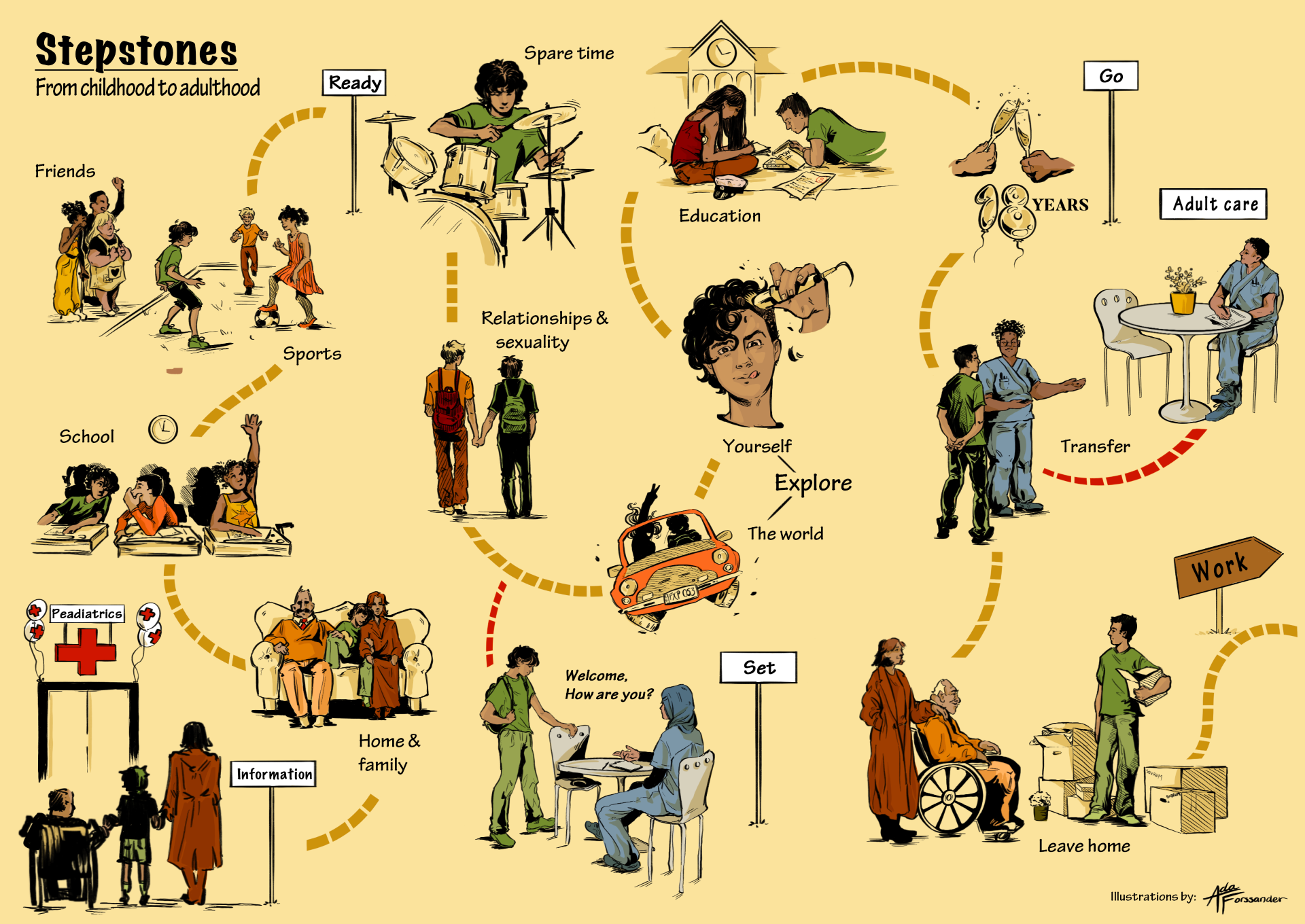
STEPSTONES is a person-centered transition program for young people with chronic conditions, aimed at creating a smooth and secure transition to adult healthcare and adulthood. It is one of the few evidence-based transition programs and has now begun implementation in Sweden. The program is generic, meaning it can be used for young people with various types of chronic conditions.
Our goal is to create a smooth and supportive transition for young people with long-term health conditions. Together, in collaboration with young people, parents, and healthcare professionals, we work towards a better future.
The STEPSTONES program is the result of collaboration between two research groups—one from the University of Gothenburg in Sweden and the other from the University of Leuven in Belgium, both of whom have worked intensively to develop this program.
In the program’s development phase, young people, their parents, young adults, patient associations, and various healthcare specialists were involved, making it a collaborative and co-created process.
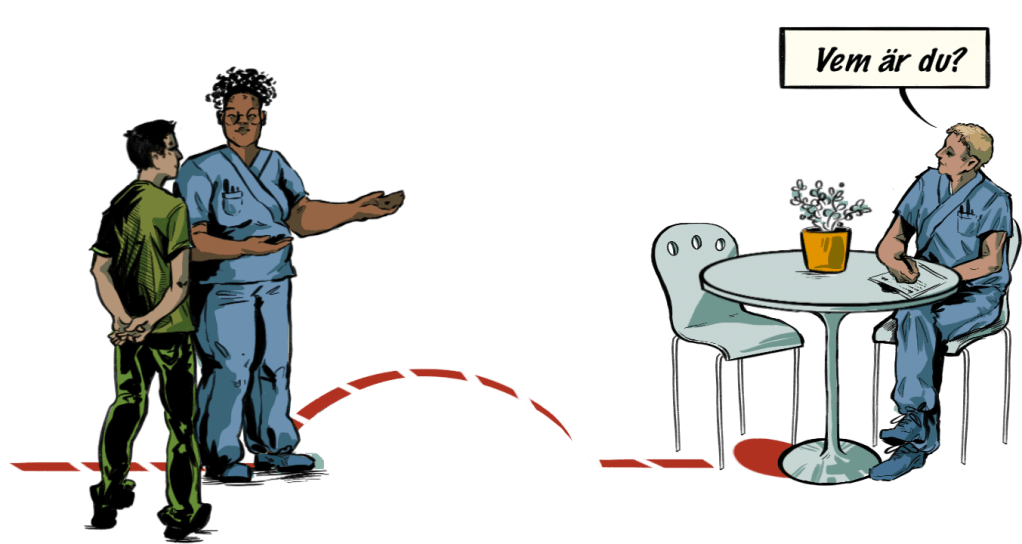
Interested in the STEPSTONES research project?
STEPSTONES is part of several ongoing research projects for young people with chronic conditions. Read more about the various research projects on the University of Gothenburg’s website.
What does the STEPSTONES program include?
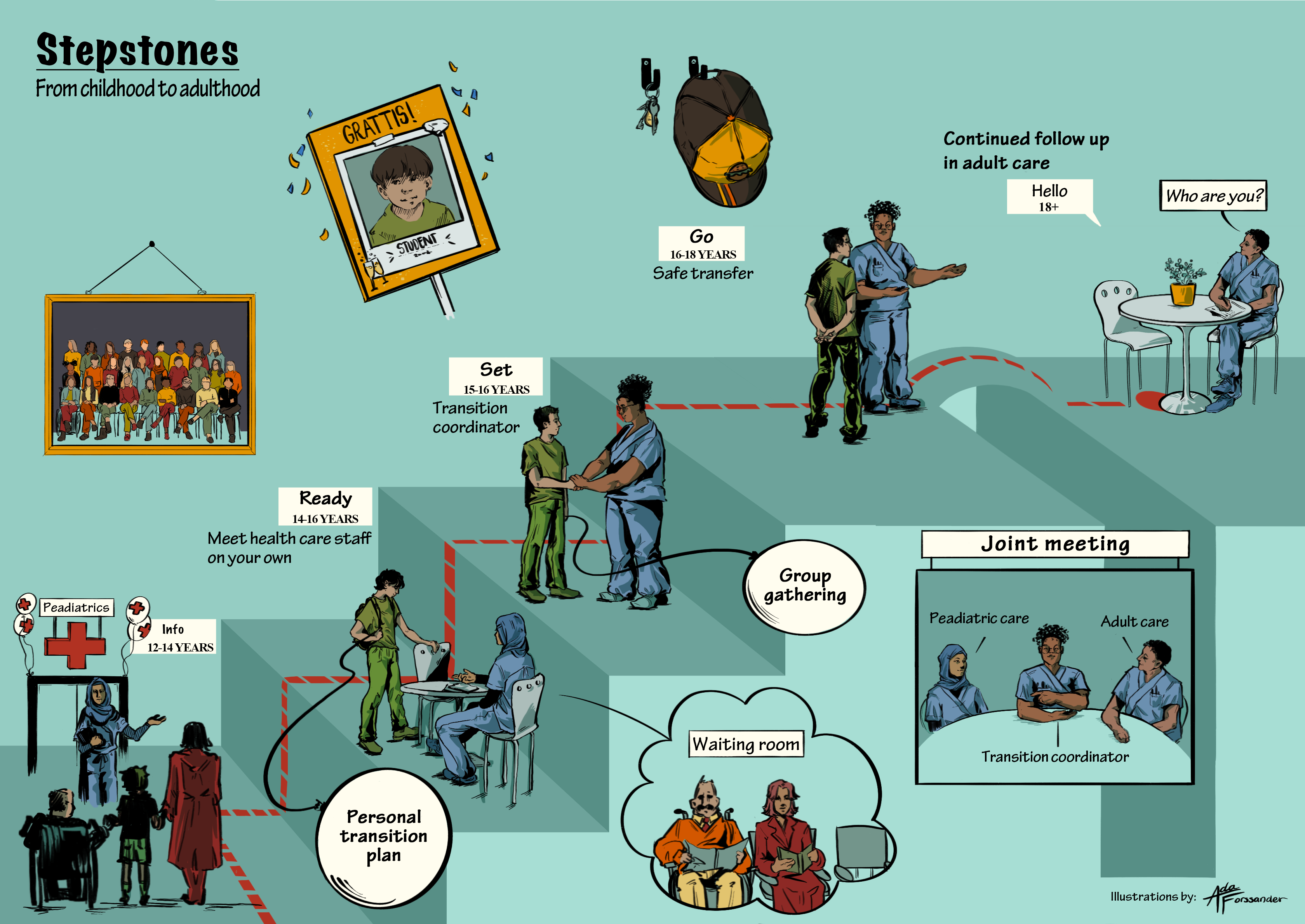
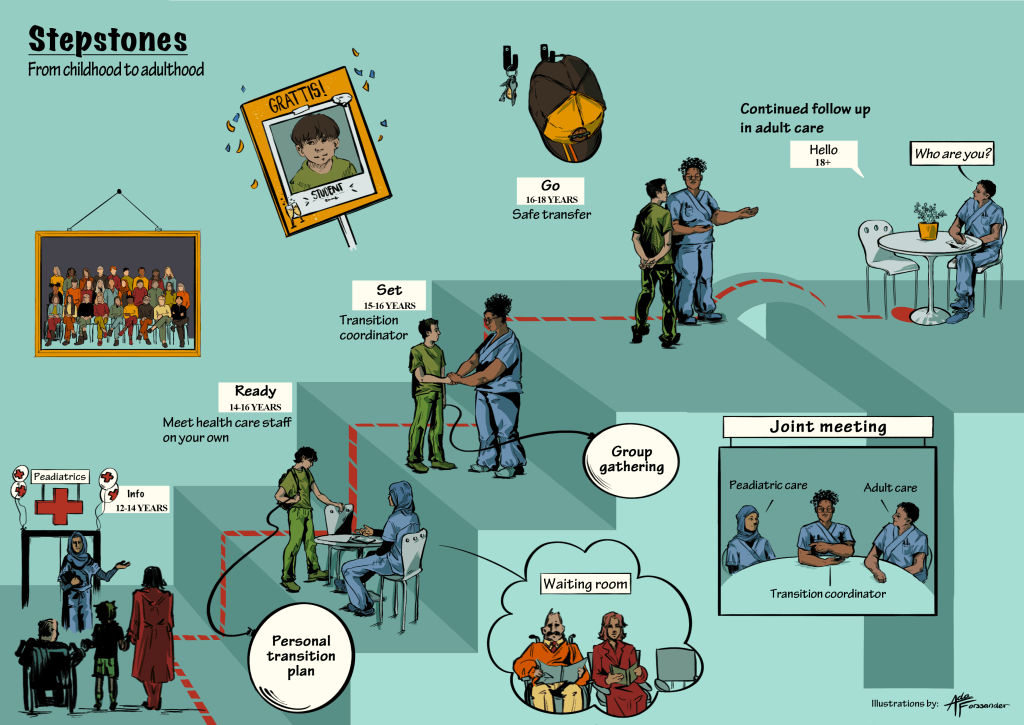
The program consists of three consultations led by a specialist nurse, known as the transition coordinator. The first consultation takes place when the young person is sixteen, followed by a consultation at seventeen, and a final consultation at eighteen with staff from adult healthcare. The program also includes a group meeting for young people and their parents, planned sometime between ages seventeen and eighteen.
Let’s explore the eight key components that form the core of the STEPSTONES program, integrated throughout the entire transition process:
Transition Coordinator: This person leads the entire transition process in close collaboration with the young person and their parents. The coordinator plays a central role in empowering and preparing the young person for the transition to adulthood and adult healthcare, understanding their unique needs and resources related to daily life and their condition.
Person-Centered Transition Plan: Together with the coordinator, the young person develops a plan documenting their resources, needs, goals, and strategies for achieving them.
Information and Education: A key part of the process is creating an environment that promotes learning and increased understanding of their condition and treatment. Here, the young person and the coordinator work together to create the best conditions for gaining knowledge about their condition and how to manage it in their daily lives.
Easy Accessibility: It should be easy for young people to contact the coordinator, without needing to navigate complex routes through others. Accessibility varies by hospital and may include phone, 1177 (Swedish health service), or other digital messaging.
Information and Contact with the Adult Team: Contact with adult healthcare staff in good time before the actual transfer, is important and provided as part of the program before the transition to adult healthcare.
Support for Parents: Parents play a crucial role in this transition process. The program aims to offer support and guidance to parents based on their needs.
Contact with Peers experiencing Similar Situations: The opportunity to meet other young people in similar situations is valuable. Special evening meetings are arranged where young people and their parents can meet, get to know the adult team, and gain insight into the new clinic. Young people who have already gone through the transition are also present to share their experiences.
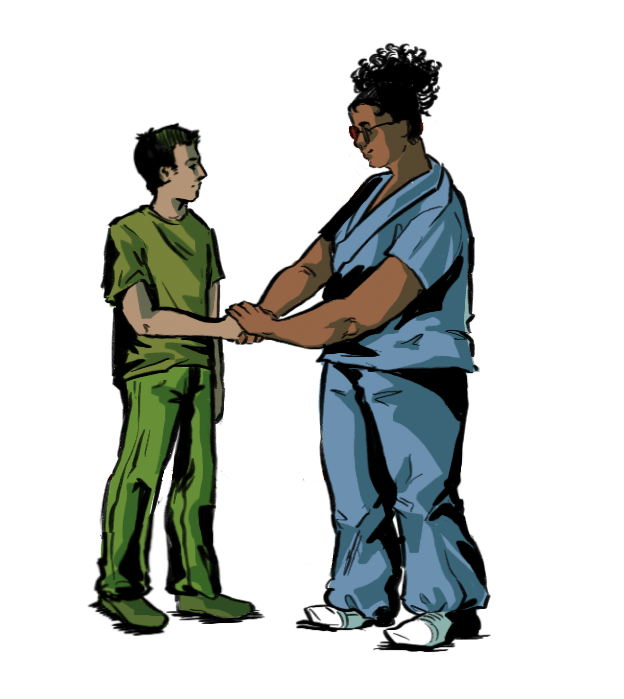
The Transfer to Adult Care: Finally, the eighth component focuses on the actual transfer to the adult team. Here, the coordinator and the young person meet with adult healthcare staff during the last visit in pediatric care.
These eight components are central and recur throughout the entire process, from the program’s start to the transition to adult healthcare.
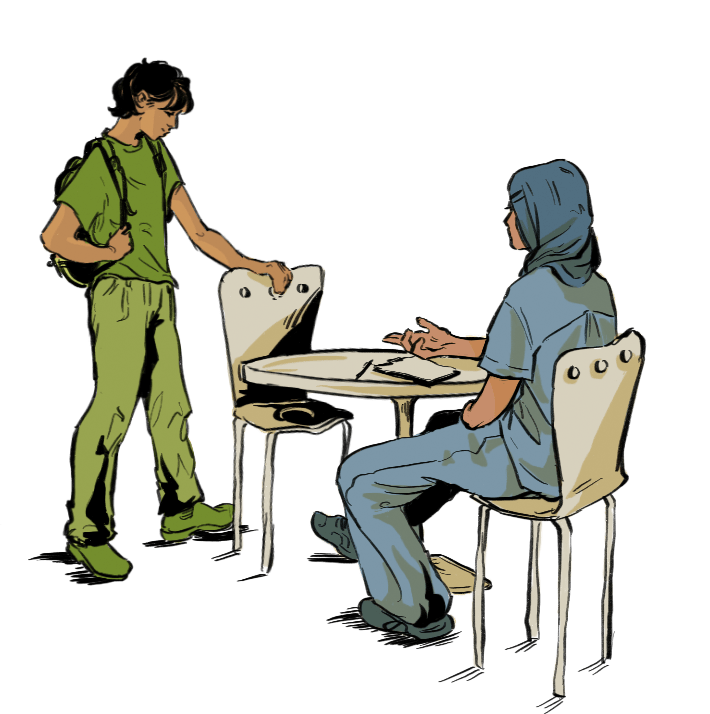
Films about STEPSTONES
What does a transition coordinator do?
How do they work, and with what tools?
What’s important to understand about young people who are beginning to take responsibility for their own care?
In a series of videos, you’ll meet the transition coordinator, doctors, and researchers specializing in this area.

Course on Transition from Pediatric to Adult Healthcare (7.5 credits)
This course is aimed at those working with young people and young adults with chronic conditions, making it relevant for healthcare professionals in both pediatric and adult healthcare. The course content is designed to create an understanding of adolescent health aspects and psychosocial factors in the transition to adult life and in connection with the shift to adult healthcare. The course covers key care activities to communicate with and empower self-care ability among young people with chronic conditions throughout the transition process.

Network for Transition Coordinators
As part of the facilitation work in the STEPSTONES Implement research project, network meetings are held for transition coordinators each semester or every other semester. The purpose of these meetings is to share experiences, gain tips and support for dealing with potential challenges, and continue the important work of providing good transitional care for all young people.
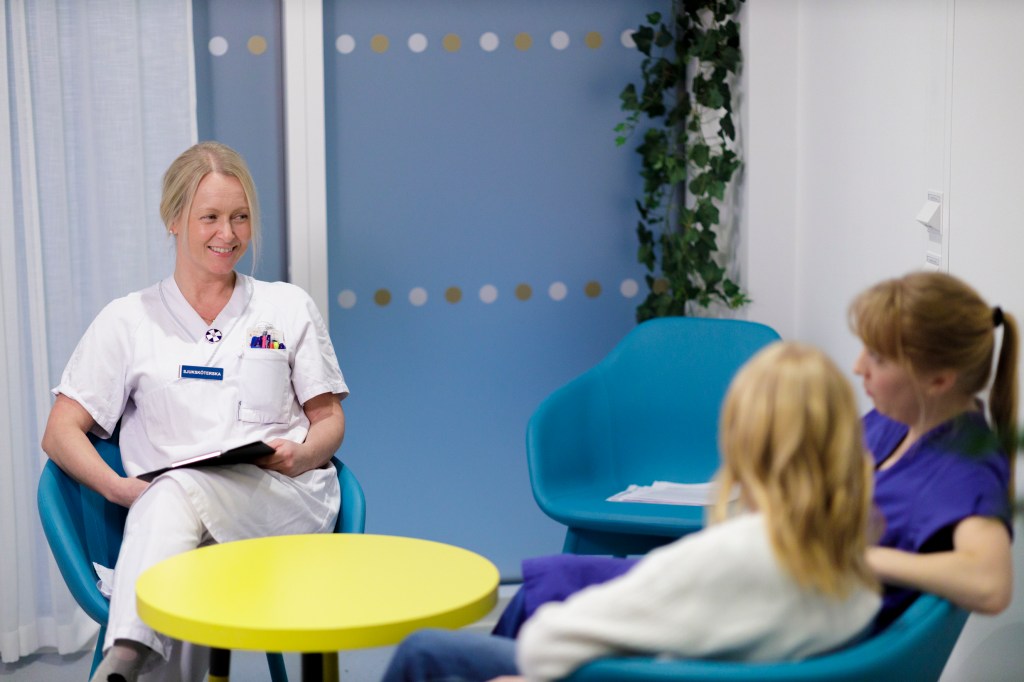
Materials and Tools – GENERAL PAGE
Here we’ve gathered information materials and tools from the STEPSTONES project
which so far have been translated to english, more is coming.
The materials are free to use in clinical practice.

 STEPSTONES